
When we launched Zanypig a couple of years ago, we knew including STEM toys in our range was very important to us. Now it’s one of our largest categories and includes many of our best sellers, including maths board games and educational toys. Little did we know then how important STEM toys would become in 2020 and into 2021. With the onset of Covid and the advent of mass home-schooling, educational toys are growing in popularity.
So what does STEM stand for?
Very simply, it stands for Science, Technology, Engineering and Maths and the term is used to define toys and games that help children to learn through play. STEM toys such as maths board games and science kits for kids help children understand the concepts of core curriculum topics such as physics, biology and chemistry, and maths and design technology. However, even more importantly, they create intrigue, foster a thirst for knowledge and enable understanding
What are the benefits of STEM toys?
It’s all about making time to play, to allow your children to become inquisitive and to seek to solve problems for themselves. Children who play with STEM toys become independent creative thinkers; they are adept at problem-solving, plus their hand-eye coordination and spatial skills are vital. It’s so easy for parents to take over and build the house, robot or solve the maths question but allowing children to do it themselves develops their problem-solving skills, and they learn how to follow instructions. Just by letting kids play, they build their knowledge often by trial and error while learning about biology and plants, electronic circuits and coding, robotics and numbers and so on.
There are a wide variety of STEM toys available for kids. Its easy to focus on maths games and classic educational toys but Science kits for kids, or magnetic games can be a lot more fun.
What about creative play?
In recent years STEM has moved towards STEAM, and this fun and educational approach to learning has incorporated art. At Zanypig, that’s a massive tick in the box as we have long believed a creative mind is a happy one hence our focus on imaginative play. It also removes the notion that a child is either good at maths or art; thank goodness Leonardo Da Vinci didn’t think like that. He was known as a polymath (I had to look that one up; basically an expert in a wide variety of subjects for a more intellectual definition, please see here). Da Vinci is probably most famous for the enigmatic Mona Lisa; however, did you know he also completed a pioneering study of the human anatomy, which included explaining how heart valves work. He also created a helicopter concept almost 500 years before it became a reality quite the agile thinker.
Want to know more about creative play? Read our Blog about the benefits of creative play.
More about Maths
Some kids get maths, they feel it, it’s tangible to them, number bonds are deeply ingrained, and they can work efficiently with numbers in their heads or on paper. Other kids struggle, and if this isn’t addressed, some will become maths phobic. So what better way to teach them than through play, individual or as a group. At Zanypig, we offer several games which help develop maths skills; some require a little more skill than others. Please have a look at our STEM toys section on our website for some great ideas.
Kids Maths Games
Bingo anyone? Great for number recognition; you may have a bingo set at home. If so, make sure you start at an appropriate level for your child to maintain motivation. Alternatively, create your own set. I would suggest using a mixture of numbers and colours for pre-school children. You can then use a combination of 5 colours and 10 numbers, giving each number a variety of colours. Alternatively, mix the colours with the numbers , whatever the kids enjoy most, and you can always get them involved in making the games.
Alternatively, what about hopscotch? All you need is chalk and a pebble. Throw the stone and hop to where it lands, trying to throw in order of 1 to 10. Just in case you can’t remember what hopscotch looks like, I’ve added an image below.
As I mentioned previously, some children need to see maths to understand it. Our number bond sticks are brilliant for supporting children with very early learning. As they develop, pizza or cake cutting is excellent for helping children understand fractions and weighing out ingredients is perfect for comprehending bigger sizes. However, if your children are still learning their number bonds, a simple card game is brilliant. Remove all of the cards 10 and above, then lay the cards out on the table. Children must make groups of 10 with as many cards as they like, for example, Ace, Ace 2 & 6 or 5 & 5. They collect the cards when they have made a successful group of 10; the winner is the child with the most cards.
Homemade Science kits for kids
They are always a winner, cornflour slime balls, they cost pennies and provide a lot of fun and mess. I’ve added a recipe below an old classic but indeed a valuable STEM toy.
Ingredients for cornflour slime balls?
Cornflour, water, a wooden spoon, a bowl.
How do you make them?
1 . Pour about half a box of cornflour into a bowl. Then gradually pour water in and mix until it looks and feels like custard don’t eat it though, tastes disgusting!
2. Roll it into balls and see if you can get through them, maybe one for outside?
Engineering STEM toys?
My kids enjoyed construction toys when they were younger; the youngest, in particular, was an avid “maker”. He didn’t always read the instructions; however, he would usually come up with something creative, sometimes resembling the picture on the box. Building towers out of playing cards, creating cardboard houses and blanket dens from dining room furniture are all the beginnings of engineering.
Free educational resources for home learning
Learning by exploring and questioning is vital in child development; please check out the links below for free activities and inspiration. BBC Bitesize is a great source for educational resources, but make sure it’s not all about lessons. STEM toys, creative play and maths games are just as important.
STEM education is becoming big news. Many schools are investing in STEM learning; James Dyson has recently donated £19 million to his former school, Greshams, to build a STEAM campus for students. I see this type of investment as an exciting opportunity for our children as industry continue to seek our future need for Engineers, Scientists and Mathematicians.
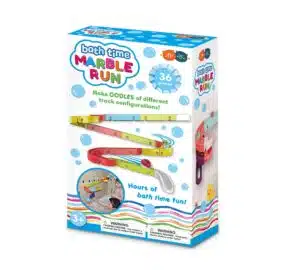
I have added some of our favourite STEM toys for kids, so if you have a budding scientist or a maths whizz, it should be easy to select an excellent present for your child, a birthday present for an 8 year old or a STEM toy for a girl.
